This guide covers different mat constructions. Choose the material, backing and care instructions for the selected model; a flexible composite mat and a segmented rigid folding mat are not interchangeable constructions.
Start with the Material
Look for high-purity diatomite
Tranjoy's guide recommends high-purity Changbai Mountain diatomite and describes its dense pores, absorption, low odor and mildew resistance. It cautions against excessive lime, gypsum and glue powder because of claimed poor absorption and shedding. These are the source's material-selection recommendations, not verified composition, origin or hygiene results for every mat; compare the selected model's material information and sample.
Understand rigid and flexible constructions
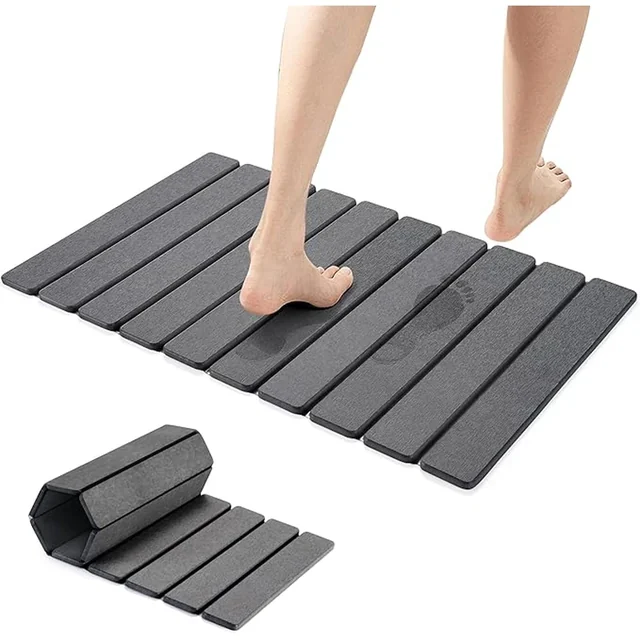
The source describes rigid mats as quick to absorb and dry, with a firm, easy-clean form for bathroom entrances and kitchen countertops. Check those properties and the intended placement for the selected rigid model rather than applying them to every mat construction.
Tranjoy describes flexible mats as comfortable underfoot and easy to fold and store for everyday home use. Confirm the selected construction: a flexible composite and a segmented rigid folding mat are different products.
Check Everyday Performance
Absorption speed and drying
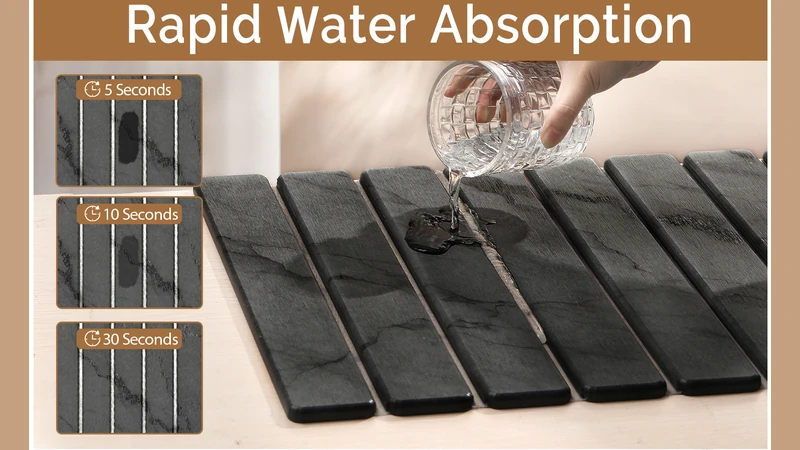
The guide describes water uptake within seconds and rapid drying as signs of a good mat, and recommends looking for slow absorption or residual water marks. These are manufacturer selection tips, not a measured absorption or drying time for the selected model; compare samples under the same conditions.
Resistance to slipping
The source recommends a silicone base or textured underside for slip resistance, including use around children and older adults. Check the selected backing and stability on the intended surface. A backing description does not guarantee safe footing on a wet floor.
Resistance to powder shedding and cracks
The guide recommends checking for white powder when gently wiping or rubbing a sample and for fragile edges or cracks. Its low-shedding and crack-resistance descriptions are selection guidance, not evidence of a fixed lifespan or an unbreakable product.
Choose for the Intended Location
Bathroom use:
The source suggests larger, thicker mats to take up water from wet feet after a shower. Its instant-absorption wording is a manufacturer description, not a tested uptake time for every bathroom mat.
Kitchen use:
Use a small draining mat for dishes and cups to keep the counter dry.
Home mini mats:
Soap mats, coasters and faucet mats offer practical use in a small footprint.
Pet & plant use:
The source suggests water-isolation mats beneath pet or plant items to reduce water marks on floors. Confirm placement and care for the selected model; this use suggestion is not a waterproofing or pet-safety certification.
Match Dimensions and Appearance
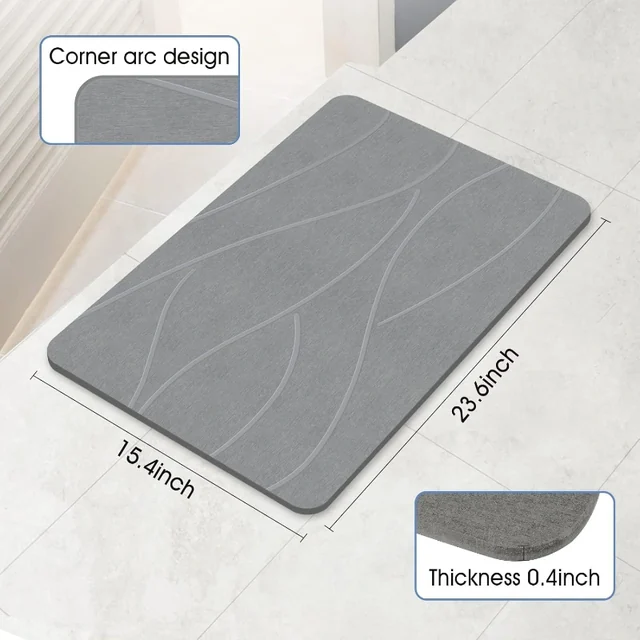
Measure the available space before choosing a size. The source gives 40×60 cm and 50×80 cm as general bathroom examples, not the dimensions of every listed model. It suggests solid shades and muted Morandi colors for coordinating with an interior; choose the finish for your setting.
Plan for Cleaning and Care
The source suggests wiping with a damp cloth for daily care. It also suggests fine sandpaper for stubborn stains, but apply that advice only to a rigid mat whose instructions permit sanding, not automatically to flexible, coated or printed surfaces.
Use the sandpaper advice above only for a rigid mat whose care instructions permit sanding. Do not sand flexible mats, coatings or printed surfaces unless the instructions for the selected product explicitly allow it.
Spot Poor-quality Products Before Buying
The source cautions against a sharp smell and attributes it to excessive glue. Odor alone does not establish a mat's composition; use the selected product's material information rather than treating smell as a chemical test.
The guide recommends avoiding fragile mats or samples that shed powder; inspect the selected construction and edges rather than assuming all products in a material category share the same quality.
The source recommends established manufacturers and environmental certifications when considering household use. It does not identify an environmental certification for every listed model, and that recommendation alone is not proof of household safety.
The guide recommends looking beyond the lowest price and associates higher-purity diatomite with higher cost and quality. This is the manufacturer's buying advice, not a verified price-to-quality comparison across suppliers.
Choose diatomite mats for a wholesale range by placement, material structure, backing and care. Compare selected samples before discussing a bulk order.