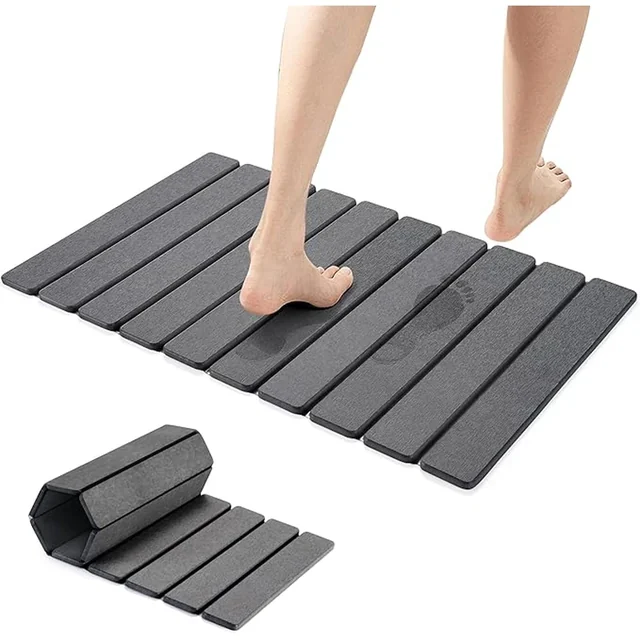
Tranjoy presents hard diatomite mats as fast-drying, highly absorbent and mold-resistant, with a durable hard surface. These are manufacturer descriptions rather than measured results for every model. Unlike ordinary soft absorbent mats, the rigid construction described here uses material refinement and industrial molding. The following sections explain pressing and surface finishing.
1. Pressing & Molding
Tranjoy states that its mixed raw materials are molded with a 10,000-ton hydraulic press, described by the manufacturer as industry-exclusive. The source links high-pressure compression with a tight internal structure, uniform density and stable flatness, intended to improve durability, pressure resistance and resistance to deformation or cracking. This process description is not independent verification of exclusivity or long-term performance for a selected mat.
2. Adding Print and Surface Treatments
Tranjoy offers custom patterns, logos and colors. The source describes its printing as eco-friendly and its patterns as clear, wear-resistant and resistant to fading; it also attributes anti-slip and stain-resistant properties to surface finishing for home decoration and brand customization. These manufacturer claims do not establish environmental certification, slip safety or measured wear performance for every finish.
Connect the process to your chosen model
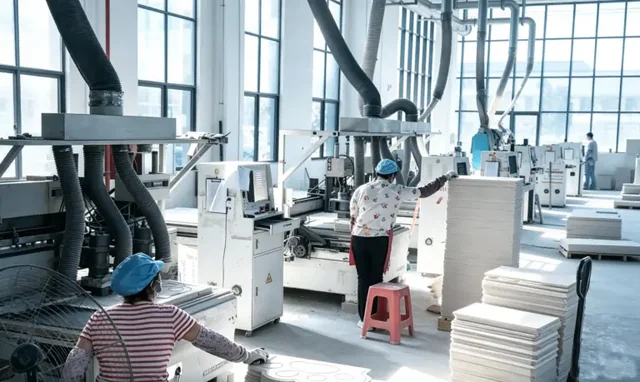
The workshop photographs linked below show CNC equipment, surface decoration and packed boards. Use those views to discuss the processing and finish of your selected model; they complement the pressing and surface-finishing description on this page.
Explore pressing and surface finishing in hard diatomite mat manufacturing. Connect the process explanation with your sample, artwork and OEM sourcing brief.